
Bacteriocins and Protective Cultures Market– Industry Structure Evaluation, Demand Drivers Analysis, Regional Growth Analysis and Identification, Competitive Positioning Review & Global Market Size Forecast to 2032
Overview
The Bacteriocins and Protective Cultures Market size was valued at USD 482.37 Million in 2024 and the total Bacteriocins and Protective Cultures revenue is expected to grow at a CAGR of 6.58% from 2025 to 2032, reaching nearly USD 803.13 Million.
Proteins or peptides that destroy bacteria are known as bacteriocins. They are present in a wide range of species, including archaea, fungi, plants, and mammals. Live microorganisms called protective cultures are used to keep food products from spoiling by preventing the growth of harmful bacteria and/or spoilage microorganisms. Due to their suitability for human ingestion and capacity to create bacteriocins, lactic acid bacteria (LAB) are the most commonly utilized protective cultures.
Additionally, the use of artificial and chemical preservatives to increase the shelf life of certain food products is not favored by many food professionals and researchers. Since protective cultures extend the shelf life of food and beverage products naturally, many scientists think their application is superior and secure. This trait is expected to attract a substantial consumer base to protective cultures in food and drink during the forecast period. As a result, it is expected that there would be an increase in demand for bacteriocins and protective cultures.
The use of protective microorganisms in processed meat and poultry products has lately emerged as a significant research area due to the necessity to lower the risks of post-processing contamination and L. monocytogenes growth in RTE raw meat. Numerous research has shown a variety of strains from various LAB species to be efficient protection cultures for smoked and grilled meals.
Therefore, it is expected that throughout the forecast period, increased demand for processed meat and poultry products would result in an increased need for bacteriocins and protective culture. Additionally, the market for bacteriocins and protective cultures is expected to increase as demand for goods based on natural food preservatives and the adoption of a healthy lifestyle increase. To know about the Research Methodology :- Request Free Sample Report
Bacteriocins and Protective Cultures Market Dynamics
Growing Adoption of Protective Cultures and Bacteriocins for Food Biopreservation to drive Bacteriocins and Protective Cultures Market Growth
Microorganisms and their byproducts have been used to preserve food through prehistoric times. The safety of lactic acid bacteria (LAB) for this use is generally recognized. They create a variety of antimicrobial compounds, including bacteriocins, organic acids, diacetyl, acetoin, hydrogen peroxide, reuterin, and reutericyclin, all of which inhibit foodborne pathogens and spoilage microorganisms.
It has been proven that bacteriocins and the strains, which produce them are effective at inhibiting a variety of bacterial pathogens in a variety of dietary matrices, including cheese, meat, and vegetables. Bacteriocins and protective cultures are now seen as promising alternatives. They guarantee the quality and safety of foods that are ready to eat, have a longer shelf life, taste fresh, and have undergone little processing. These factors are boosting the bacteriocins and protective cultures market growth across the world.
One of the more recent trends is adding bacteriocins directly to food surfaces or packaging in purified or semi-purified form, or adding bacteriocin-producing LAB to bioactive films and coatings. The recent advancements and uses of bacteriocins and bacteriocin-producing LAB for lowering microbiological deterioration and enhancing dairy product safety are driving the bacteriocins and protective cultures market growth.
Growing Application of Bacteriocins and Protective Cultures in Dairy Food Preservation
Consumers have gradually been more conscious of the adverse effects on human health caused by the use of chemical preservatives in food. On the other hand, the dairy industry's growing need for new preservatives and innovative means of preservation to increase shelf life and avoid deterioration of dairy products. Antimicrobial peptides known as bacteriocins are considered to be safe since the mammalian gastrointestinal tract's proteolytic enzymes can quickly break them down.
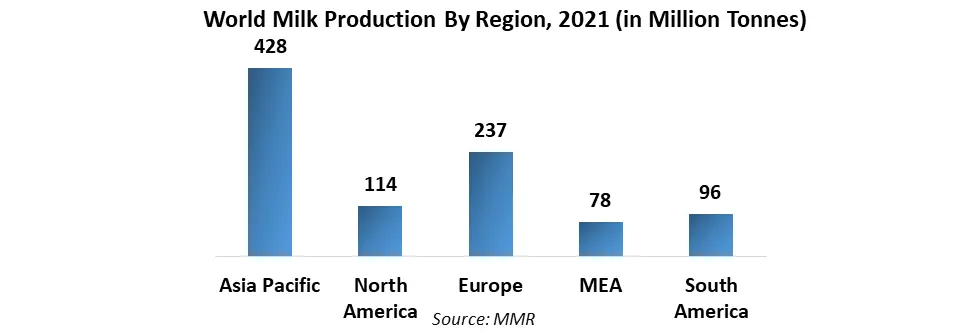
Dairy is a significant global industry despite its local concentration; there are about 270 million dairy cows worldwide. The production of milk takes place all around the world. Thanks to the increasing population, rising incomes, urbanization, and the westernization of diets in nations like China and India, the demand for dairy products worldwide continues to go up, which in turn is expected to boost the bacteriocins and protective cultures market growth through the forecast period.
 The Growing Use of Bacteriocins and Protective Cultures for Seafood Product to Drive the Bacteriocins and Protective Cultures Market Growth
The presence of LAB (lactic acid bacteria) in many processed seafood products has long been recognized, and while some strains can occasionally cause spoiling, many strains' bioprotective potential has recently come to light. The results of using protective cultures, bacteriocins, and bacteriophages to increase the safety and quality of seafood items are currently in favor of using live cultures, which appear to be more effective than bacteriocin during the prolonged storage time on these foods. As a result, these factors are expected to boost the bacteriocins and protective cultures market growth through the forecast period.
Bacteriocins and Protective Cultures Market Segment Analysis
Based on Type, the Bacteriocins and Protective Cultures Market is segmented into Freeze-Dried and Frozen. The Freeze-Dried segment held the largest market share in 2024. Certain bacteria produce antimicrobial peptides known as freeze-dried bacteriocins. They have the power to eradicate other bacteria or stop their growth. Lantibiotics and non-lantibiotics are the two primary types of bacteriocins.
Bacteriocins that have been freeze-dried are perfect for use in applications involving food preservation since they are stable at high temperatures and pH levels. Microorganisms that have been dried using freezing methods are known as freeze-dried protective cultures. To preserve food goods, these cultures are used in the food industry, which in turn, drives the segment growth.
Based on Application, the Bacteriocins and Protective Cultures Market is segmented into Dairy and Dairy Products, Meat and Poultry Products, Seafood, and Others. The Dairy and Dairy Products segment dominated the Bacteriocins and Protective Cultures Market in 2024 with the highest market share and is expected to hold the highest revenue share during the forecast period. The dairy industry uses bacteriocins and protective cultures to preserve milk and dairy products.
Thanks to their ability to produce bacteriocins and the fact that they are safe for human consumption, lactic acid bacteria (LAB) are the most often used bacteriocins in the dairy sector. The growing adoption of bacteriocins and protective cultures in the dairy industry is boosting segment growth across the world.
Bacteriocins and Protective Cultures Market Regional Insights
Europe held the largest Bacteriocins and Protective Cultures Market share in 2024. The Bacteriocins and Protective Cultures Market revenue in this region is expected to grow at the highest CAGR during the forecast period. The region’s growth is attributed to the growing use of Bacteriocins and Protective Cultures in Dairy and Dairy Products, Meat and Poultry Products, and Seafood for food preservatives.
North America is expected to witness a high CAGR in the global market during the forecast period. The growing demand for safe food, increasing demand for ready-to-eat food products, and exponential growth in the demand for natural food preservatives are driving the bacteriocins and protective cultures market growth for North America.
Bacteriocins and Protective Cultures Market Scope: Inquiry Before Buying
| Bacteriocins and Protective Cultures Market | |||
|---|---|---|---|
| Report Coverage | Details | ||
| Base Year: | 2024 | Forecast Period: | 2025-2032 |
| Historical Data: | 2019 to 2024 | Market Size in 2024: | USD 482.37 Mn. |
| Forecast Period 2025 to 2032 CAGR: | 6.58% | Market Size in 2032: | USD 803.13 Mn. |
| Segments Covered: | by Type | Freeze-Dried Frozen |
|
| by Application | Dairy and Dairy Products Meat and Poultry Products Seafood Others |
||
| by Target Microorganism | Yeasts and Molds Bacteria |
||
Bacteriocins and Protective Cultures Market, by Region
North America (United States, Canada and Mexico)
Europe (UK, France, Germany, Italy, Spain, Sweden, Austria and Rest of Europe)
Asia Pacific (China, South Korea, Japan, India, Australia, Indonesia, Malaysia, Vietnam, Taiwan, Bangladesh, Pakistan and Rest of APAC)
Middle East and Africa (South Africa, GCC, Egypt, Nigeria and Rest of ME&A)
South America (Brazil, Argentina Rest of South America)
Bacteriocins and Protective Cultures Market, Key Players are
1. CHR Hansen
2. DowDuPont
3. Sacco S.R.L
4. CSK Food Enrichment B.V.
5. THT S.A.
6. Dalton Biotechnologies
7. Biochem S.R.L
8. Meat Cracks Technology GmbH
9. DSM
10. Bioprox
11. Aristomenis D. Phikas & Co SA.
12. Soyuzsnab Group
13. Phikas and Co SA.,
14. DSM
15. M Food Group GmbH
16. Proxis Développement
17. Puratos Group NV
Frequently Asked Questions:
1] What is the growth rate of the Global Bacteriocins and Protective Cultures Market?
Ans. The Global Bacteriocins and Protective Cultures Market is growing at a significant rate of 6.58% during the forecast period.
2] Which region is expected to have the highest growth rate in the Global Market?
Ans. The Europe region is expected to hold the highest growth rate in the Bacteriocins and Protective Cultures Market during the forecast period.
3] What is the market size of the Global Market by 2032?
Ans. The market size of the Bacteriocins and Protective Cultures Market by 2032 is expected to reach USD 803.13 Mn.
4] What are the major key players of the Global Market?
Ans. The major key players of the Global Market are DowDuPont, Sacco S.R.L, Dalton Biotechnologies, Biochem S.R.L, Meat Cracks Technology GmbH, Aristomenis D. Phikas & Co SA., Soyuzsnab Group, Proxis Développement, and Puratos Group NV.
5] What was the Global Bacteriocins and Protective Cultures Market size in 2024?
Ans: The Global Bacteriocins and Protective Cultures Market size was USD 482.37 Million in 2024.