
Global Anti-Wrinkle Products Market - Industry Structure Evaluation, Demand Drivers Analysis, Regional Growth Analysis and Identification, Competitive Positioning / Landscape Review & Global Market Size Forecast to 2030
Overview
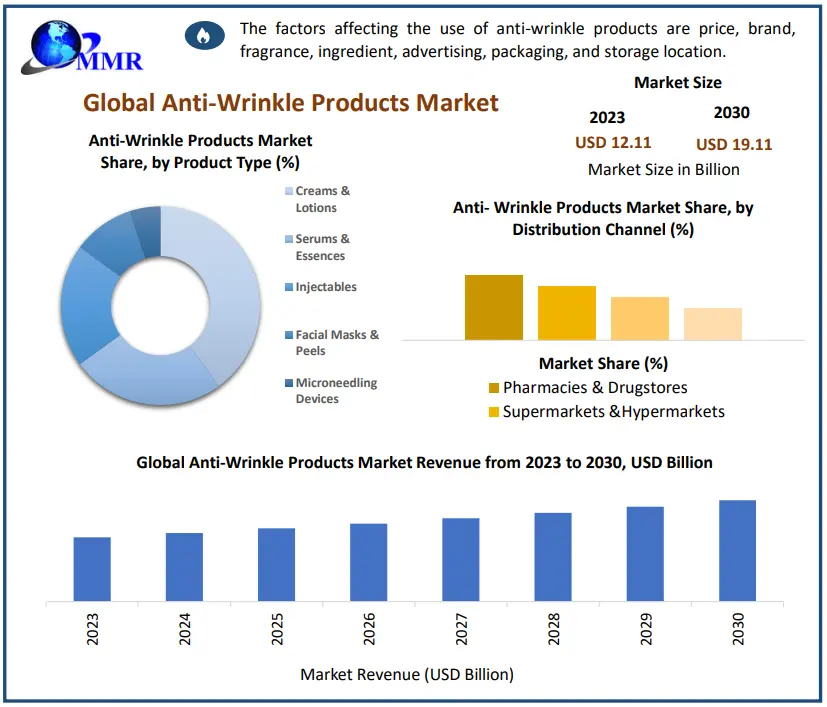
The Anti-Wrinkle Products Market size was valued at USD 12.11 Billion in 2023 and the total Anti-Wrinkle Products revenue is expected to grow at a CAGR of 6.4% from 2024 to 2030, reaching nearly USD 19.11 Billion by 2030.
Anti-Wrinkle Products Market Overview
Anti-winkle products are formulated hygiene products that aim to reduce the development of wrinkles, fine lines, and indicators of aging on the skin, formulated with active ingredients.
 To know about the Research Methodology :- Request Free Sample Report
The global population is aging, and the proportion of senior people is rising globally.
1. According to MMR analysis, in 2023 U.S. multi-outlets generated over USD 5 Billion through skincare product sales in 52 weeks, reaching a peak compared to the previous years.
Customers of all ages have become more sensitive about their physical appearance, which has stimulated the demand for anti-aging products and technology. When compared to younger skin, aging skin causes a decrease in fat storage problems, greater sensitivity to radiation, higher exposure to skin infections, and collagen loss. These things make anti-wrinkle cosmetics necessary for aging customers. The increasing amount of workshops, gatherings, and advertising around personal hygiene and beauty items and their benefits also aids in the acceptance of anti-aging makeup. The risk of skin allergies is increased by high chemical content cosmetic skincare products, which limits growth potential for companies in the anti-aging products industry. Constant advancements in technology in skincare lead to the creation of novel and more effective products, which fuel growth in the market. For example, the total efficiency of the cosmetic is improved by modern innovations like the transdermal absorption system, which also helps with dispersion and solubility efficiency. Additionally, spas and skincare clinics frequently utilize anti-aging beauty products to give their clients an efficient skincare solution. The growth of the spa industry and the medical tourism sector have led to an increase in demand for a variety of cutting-edge anti-aging cosmetics.
North America holds a share of about 25% is the second largest market in Anti-Wrinkle Products. The number of aging individuals in North America is rising, which extends the market for anti-wrinkle items. Additionally, the infrastructure that is already in place makes it easier to implement new trends and technology, because they have more disposable income, and consumers can spend more on anti-wrinkle products. The region's anti-wrinkle industry is well-established, with a sizable consumer base. New anti-wrinkle technology and chemicals are developed and introduced in large part by North America, drawing in customers looking for the newest remedies. Anti-wrinkle products are now more readily available and easier to buy because of the growth of e-commerce platforms, which increases their market reach.
Anti-Wrinkle Products Market dynamics
Aging and Ascending Beauty Consciousness
The aging of the global population and the rising value associated with appearance and beauty consciousness are two key growth drivers in the anti-wrinkle product industry. As individuals understand the importance of taking care of their skin and looking young, wrinkle-fighting products are in high demand. Technological innovations in skincare lead to the creation of novel and more effective products that fuel growth. The anti-wrinkle products are widely available thanks to the growth of e-commerce and online retail, which is dominating conventional retail channels. Additionally, the shifting conditions of the market are further influenced by regional differences, legal compliance, brand loyalty, and skincare preferences. The steady increase in awareness of UV protection and growing social media influencers is raising the demand for anti-wrinkle products. Factors like changing lifestyles, increasing disposable budgets, and a growing understanding of the significance of skincare practices further propel the anti-wrinkle products market growth.
Rising Demand for Natural & Organic Products
Consumers are becoming aware of the negatives of synthetic ingredients and are seeking holistic approaches for their well-being. The concern about harsh chemicals, allergies, and environmental impact, led them to explore plant-based and organic alternative products. The rise of clean beauty focuses on transparency, sustainability, and ethical sourcing, which aligns well with natural and organic ingredients. Consumers are willing to pay more for products that reflect values and commitment to responsible consumption. Scientific research is also supporting the effectiveness of natural ingredients in addressing signs of aging. Advancements in extraction and formulation techniques are unlocking the full potential of these ingredients, allowing for the development of high-performance natural and organic products.
Additionally, beauty bloggers and sustainability-focused communities are promoting the alternatives and building trust among consumers. The rising demand for natural and organic products presents a significant opportunity for the anti-wrinkle market, and brands to capitalize by developing innovative products that meet consumer desires. By focusing on genuine natural ingredients and responsible practices, the market evolves along with consumer preferences, promoting a more conscious approach to beauty.
Anti-Wrinkle Products Market Segment Analysis
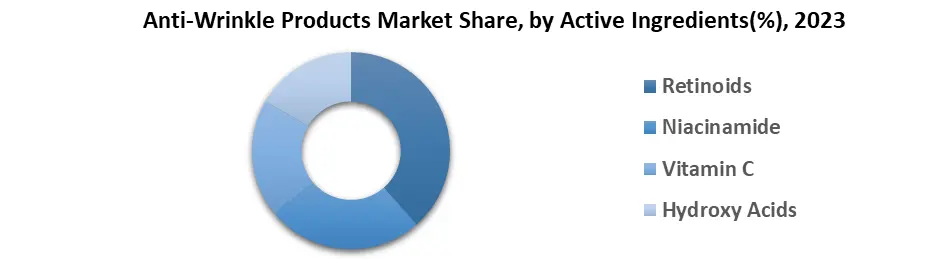
Based on Active Ingredients, Retinol Segment held the largest market share of about 30% in the global Anti-Wrinkle Products Market in 2023. According to MMR analysis, the segment is further expected to grow at a CAGR of 6.7% during the forecast period and stands out as the dominant segment within the Anti-Wrinkle Products Market. The efficacy of retinoids, particularly retinol, in reducing wrinkles and fine lines, enhancing skin texture, stimulating collagen production, and minimizing hyperpigmentation is extensive.
The retinoids come in different structures, taking care of various skin types and concerns, considering individual customization and progressive events to limit bothering, making them reasonable for a more extensive consumers. Additionally, they have been a pillar in the anti-aging market for decades, leading to established brand recognition and consumer trust. Dermatologists frequently recommend their use, further solidifying their reputation. The segment is constantly evolving, with new delivery systems and formulations emerging to address potential drawbacks like irritation and sun sensitivity, enhancing efficacy and improving user experience. Additionally, retinoids benefit from extensive marketing and consumer awareness owing to their proven effectiveness, fueling continued demand and market growth.
Additionally, the Niacinamide held a market share of about 20% in 2023 and is expected to grow at a significant CAGR during the forecast period. Niacinamide has become progressively well-known in the market because of its capacity to treat various skin concerns like kinks, including pores, hyperpigmentation, and irritation. Additionally, Niacinamide has its effectiveness in improving skin barrier function and reducing visible signs of aging. It aligns with the trend of natural ingredients in skincare and benefits from new formulations and combinations with other ingredients that enhance its appeal and functionality. The Niacinamide benefits from extensive marketing and consumer awareness due to its proven effectiveness, fueling continued demand and market growth.
Anti-Wrinkle Products Market Regional Insights
Asia Pacific Region dominated the Global Anti-Wrinkle Products Market with the highest share of over 38% in 2023. The region is expected to grow at a CAGR of 6.4% and maintain its dominance during the forecast period. The increased consumption of skincare products and cosmetics in emerging markets like China and India is driven by rising concerns about skin issues such as acne, sunburns, melanoma, and the damaging effects of UV rays and pollutants. APAC has a mix of established international brands like L'Oréal and Estée Lauder alongside strong domestic players like SK-II and Innisfree, offering diverse product options.
The region's growing population, rising disposable incomes, and increased awareness of anti-wrinkle products have dominated the market. China is a top influencer with customers greatly influenced by beauty bloggers who advocate and evaluate items, pushing sales and trends. India's rich expertise in Ayurveda and herbal cures has resulted in an affinity for skincare and beauty products that include natural and traditional ingredients, appealing to people seeking holistic and wellness-focused solutions. Additionally, Korean beauty trends have significantly impacted the Japanese beauty sector, increasing demand for novel anti-aging products, notably sheet masks and multi-step skincare regimes. Using traditional Japanese components in wrinkle-reduction solutions, such as rice bran and green tea, appeals to local and foreign consumers seeking the advantages of ancient wisdom. The impact of social media and the rise of e-commerce have expanded the reach of beauty firms in the region, making anti-wrinkle products more readily accessible to consumers.
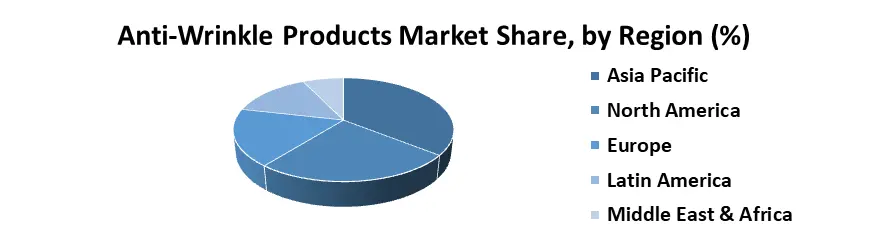
Additionally, Europe held a significant market share and is growing with a CAGR of XX% during its forecast period. Established markets like France, Germany, and the UK contributed significantly, driven by factors like high disposable incomes, an aging population, and awareness of skincare trends. Consumers in the region prefer high-quality; effective products that help to reduce the appearance of fine lines and wrinkles. In addition, the growing enthusiasm for non-invasive cosmetic procedures, such as dermal fillers and botox injections, has further fuelled the product demand in Europe. Regulatory frameworks and consumer interest in natural and organic products influenced market dynamics.
Anti-Wrinkle Products Market Competitive Landscapes
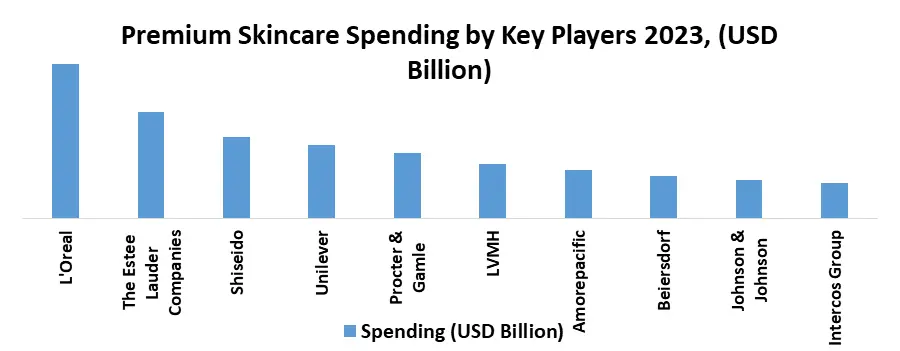
The global anti-wrinkle products market is highly competitive and is dominated by major players such as L’ORÉAL GROUPE, OLAY, CeraVe, Neutrogena, RoC Skincare, POND’S, No7 Beauty Company (Walgreens Boots), La Roche-Posay Laboratoire Dermatologique, REN Clean Skincare, Galderma S.A., Clinique Laboratories, LLC, Shiseido Co., Ltd, The Estée Lauder Companies Inc., Life Extension, Vichy Laboratoires, Kiehl’s Since 1851, Groupe Clarins, and Origins Natural Resources, Inc. These industry giants continue to spend on R&D, innovation, and acquisition tactics to keep their competitive advantage. The market's competitive environment is defined by a dynamic interaction between large global corporations, developing niche brands, and e-commerce innovators.
1. In January 2023, REN Clean Skincare launched Boost+Protect Perfect Canvas Smooth, Prep & Plump Essence, which includes bioactive that plumps skin with hydration. It also contains polyglutamic and hyaluronic acid for smooth skin and reinforces the skin barrier.
2. In October 2023, Indian actress Nayanthara and filmmaker Vignesh Shivan launched a new skincare line, 9Skin, alongside serial entrepreneur Daisy Morgan. A few of the company's unique items include SKINTILLATE, a booster oil; REJUVENATE, a night cream; ETERNELLE, an anti-aging serum; ILLUMINATE, a glow serum; and REVIVE, a day cream.
3. In June 2023, in conjunction with the introduction of its new anti-aging serum, PCA Skin had its parent business, CP Skin Health Group (Colgate-Palmolive), collaborate with NASA onboard the International Space Station (ISS) to examine the effect of microgravity on skin physiology.
Anti-Wrinkle Products Market Scope : Inquire Before Buying
| Global Anti-Wrinkle Products Market | |||
|---|---|---|---|
| Report Coverage | Details | ||
| Base Year: | 2023 | Forecast Period: | 2024-2030 |
| Historical Data: | 2018 to 2023 | Market Size in 2023: | US $ 12.11 Bn. |
| Forecast Period 2024 to 2030 CAGR: | 6.4% | Market Size in 2030: | US $ 19.11 Bn. |
| Segments Covered: | by Active Ingredients | Retinoid Niacinamide Vitamin C (Ascorbic Acid) Hydroxy Acids Peptides |
|
| by Product Type | Cream Oil Lotion Serum Gel |
||
| by Nature | Natural/Herbal Synthetic Organic |
||
| by Distribution Channel | Supermarkets & Hypermarkets Specialty Stores Pharmacies & Drugstores Online |
||
| by End User | Men Women |
||
Anti-Wrinkle Products Market, by Region
North America (United States, Canada, and Mexico)
Europe (UK, France, Germany, Italy, Spain, Sweden, Austria, and the Rest of Europe)
Asia Pacific (China, South Korea, Japan, India, Australia, Indonesia, Malaysia, Vietnam, Taiwan, Bangladesh, Pakistan, and the Rest of APAC)
Middle East and Africa (South Africa, GCC, Egypt, Nigeria, and the Rest of ME&A)
South America (Brazil, Argentina Rest of South America)
Anti-Wrinkle Products Market Key Players
1. Estee Lauder (USA)
2. L’ORÉAL (France)
3. Shiseido (Japan)
4. Chanel (France)
5. Clinique (USA)
6. Allergan (Ireland)
7. Galderma (Switzerland)
8. Merz Aesthetics (Germany)
9. AbbVie (USA)
10. Ipsen (France)
11. Neutrogena (USA)
12. OLAY (USA)
13. L'Oreal Paris (France)
14. CeraVe (USA)
15. Aveeno (USA)
16. The Body Shop (UK)
17. Burt's Bees (USA)
18. Kiehl's (USA)
19. Drunk Elephant (USA)
20. REN Clean Skincare (UK)
21. SK-II (Japan)
22. Sulwhasoo (South Korea)
23. RoC Skincare
24. POND’S
25. No7 Beauty Company (Walgreens Boots)
26. La Roche-Posay Laboratoire Dermatologique
27. The Estée Lauder Companies Inc.,
FAQs:
1. What are the growth drivers for the Anti-Wrinkle Products market?
Ans. Rising disposable incomes, a growing aging population, and technological advances are the drivers of the Global Anti-Wrinkle Products Market.
2. What are the major restraints for the Anti-Wrinkle Products Market growth?
Ans. Limited Efficacy, high costs, and safety concerns are the major challenges for the Anti-Wrinkle Products Market.
3. Which region is expected to lead the global Anti-Wrinkle Products Market during the forecast period?
Ans. North America is expected to lead the global Anti-Wrinkle Products Market during the forecast period.
4. What is the projected market size & and growth rate of the Anti-Wrinkle Products Market?
Ans. The Anti-Wrinkle Products Market size was valued at USD 12.11 Billion in 2023 and the total Anti-Wrinkle Products revenue is expected to grow at a CAGR of 6.4% from 2024 to 2030, reaching nearly USD 19.11 Billion by 2030.
5. What segments are covered in the Anti-Wrinkle Products Market report?
Ans. The segments covered in the Anti-Wrinkle Products Market report are active ingredients, product type, nature, end-user, distribution channel, and region.